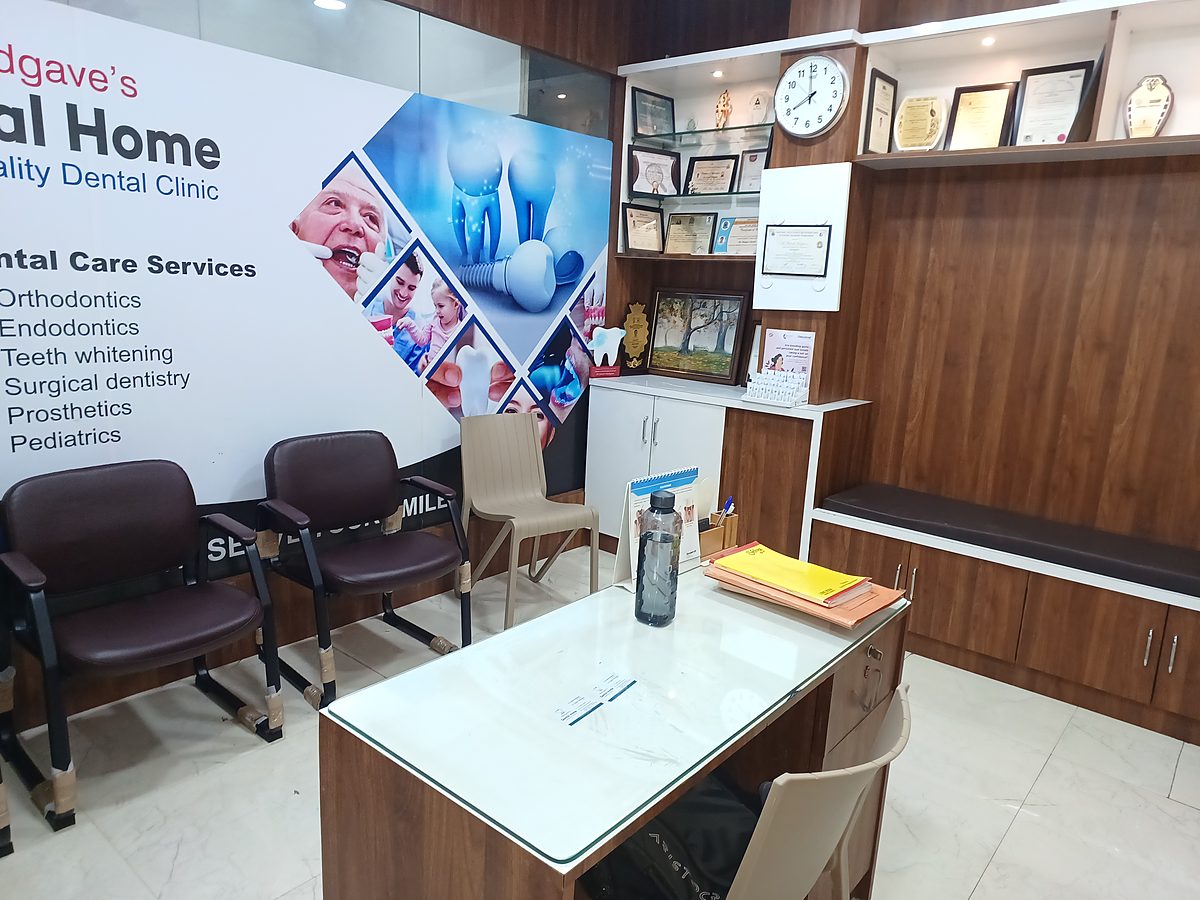
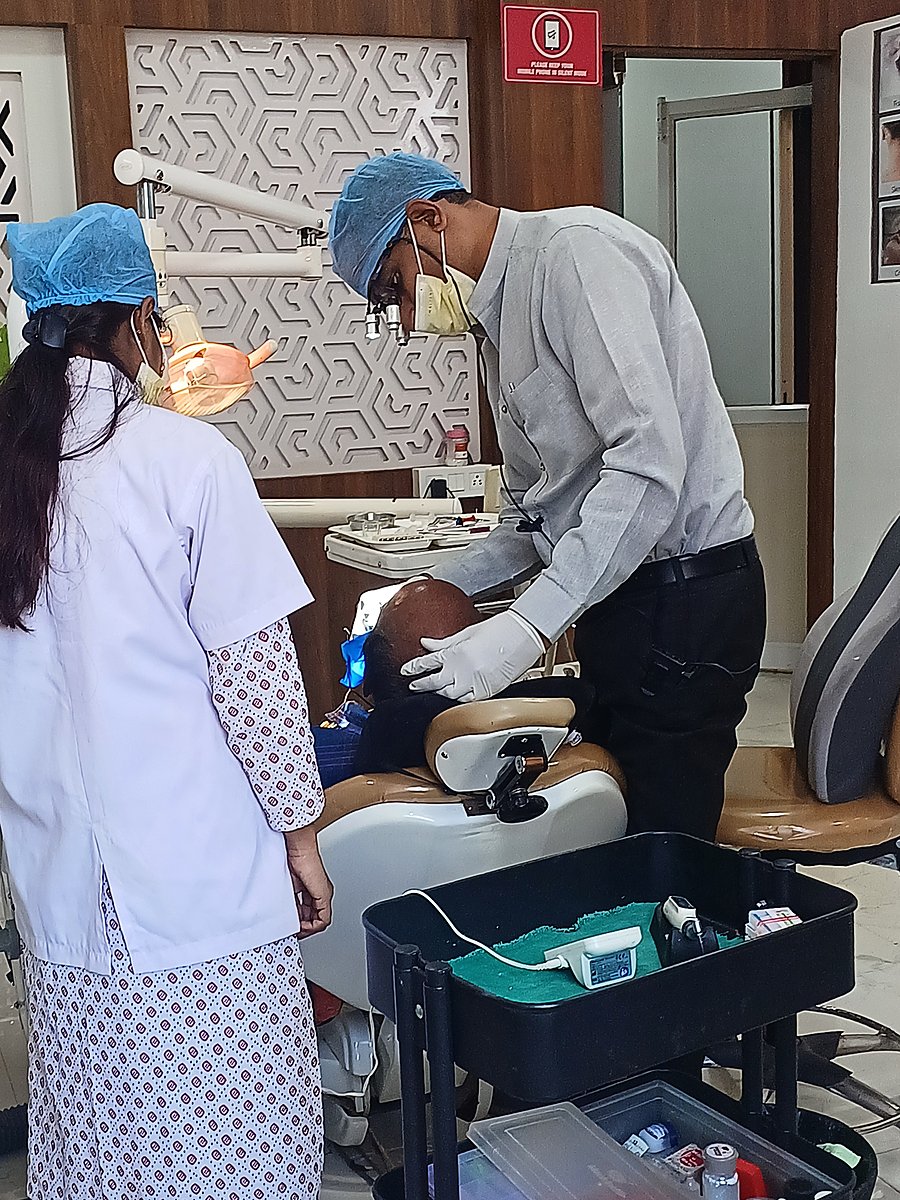
Bidar's Trusted Dental & Cosmetic Care
Your Smile. Transformed.

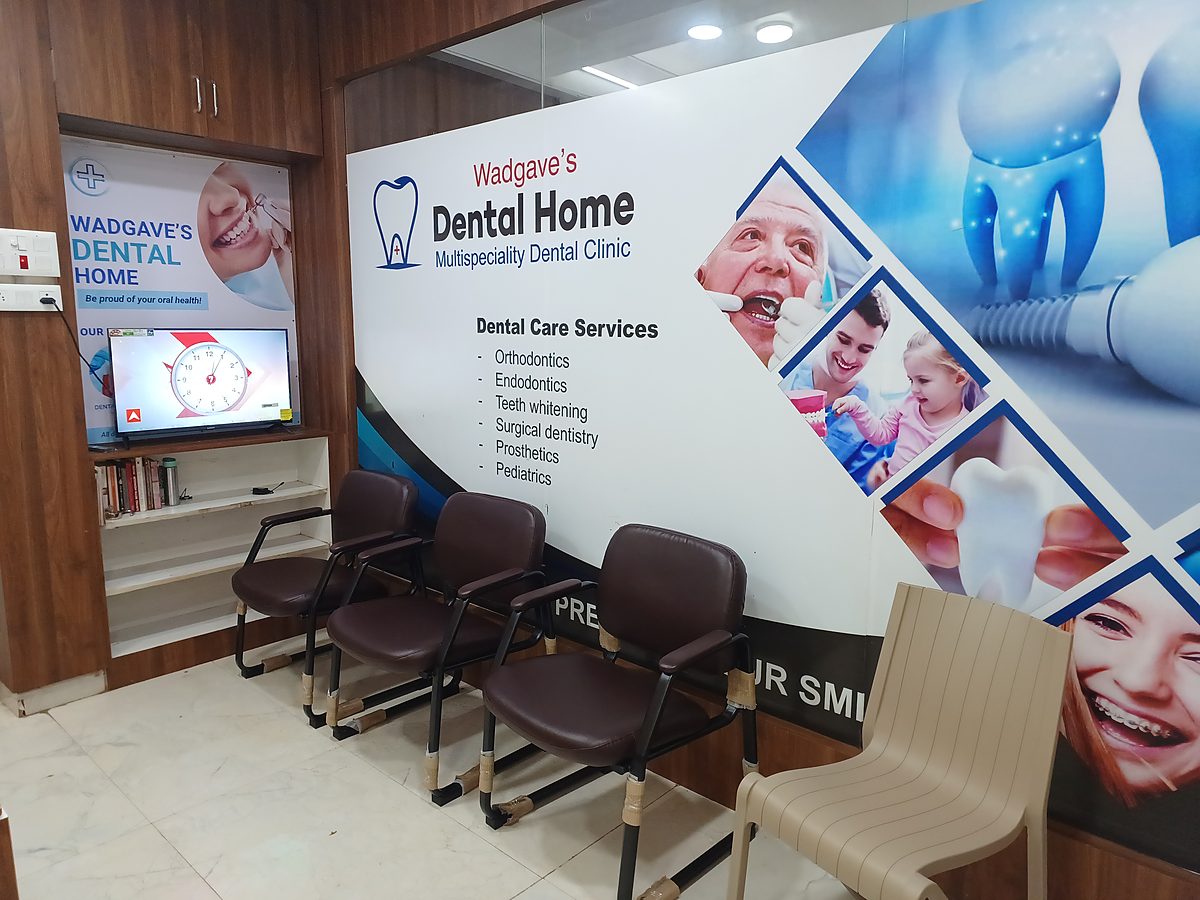
Wadgave's
Dental & Cosmetic Home
Bidar

Advanced dental treatments and cosmetic care delivered with precision, compassion, and the latest technology — right here in Bidar, Karnataka. Led by Dr. Umesh Wadgave (Chief Dentist & Researcher) and Dr. Yogita U Wadgave (Cosmetic Specialist).

4.8★ Patient
Rating
123+ Verified
Reviews
140+ Clinic
Photos
6 Specialty
Services
Open Today
Wadgave's Dental & Cosmetic Home
4.8 · 123 reviews on Google

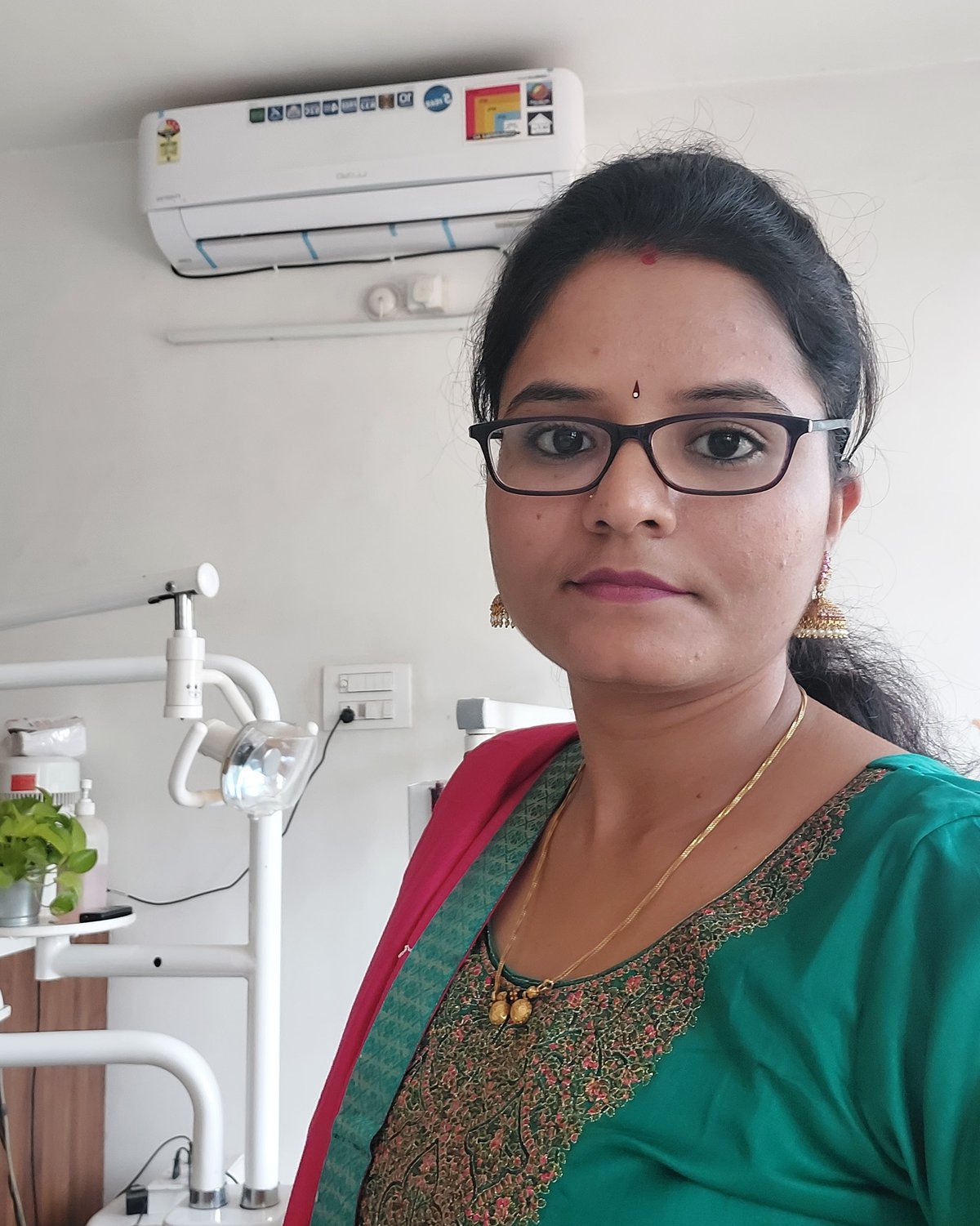
Dr. Umesh Wadgave — Chief Dentist & published researcher. Modern facilities, compassionate care, strict hygiene protocols.

Mon–Sat
Open Days
2
Daily Sessions
6+
Treatments
Our Treatments

Dental & Cosmetic
Services

From routine preventive care to complex full-mouth rehabilitation — comprehensive dentistry delivered with modern technology, expert hands, and a gentle, unhurried touch.

Preventive Care & Cleaning

Professional scaling removes plaque and tartar that brushing simply can't reach, while fluoride application strengthens enamel against decay. Regular checkups catch issues early — protecting your teeth, your overall health, and saving you from larger procedures down the line.

Foundation of Health Read full guide
Composite Fillings

Most cavities don't need a root canal or a crown — caught in time, they can be quietly restored with tooth-coloured composite fillings that match your natural enamel exactly. Mercury-free, bonded directly to the tooth, aesthetic, and built to last for years — restorations that look like they were never there.

Aesthetic & Long-Lasting Read full guide
Painless Root Canal Treatment

Save your natural tooth — even when the pulp is infected — instead of losing it to extraction. Using modern rotary endodontics with effective anaesthesia, the procedure is genuinely comfortable, often completed in a single sitting. Patients are usually surprised by how easy it is.

Pain-Free Procedure Read full guide
Crowns & Bridges

Restore broken, weakened, or missing teeth with precision-fit crowns and bridges. We capture impressions with an intra-oral scanner — no messy putty, faster turnaround, better fit. Choose between Zirconia (metal-free, life-like translucency, exceptional strength) or PFM — porcelain-fused-to-metal — for time-tested durability, based on your needs.

Intra-Oral Scanning Read full guide
Dental Implants

The closest thing to a natural tooth. A titanium root is placed in the jaw, topped with a custom crown that looks, feels, and functions like the real thing. Implants preserve jaw bone, stop neighbouring teeth from shifting, and last for decades with proper care — for single teeth, multiple teeth, or full arches.

Permanent Replacement Read full guide
Braces & Clear Aligners

Straighten teeth and correct bite issues at any age. Traditional metal and ceramic braces handle complex corrections; clear aligners offer a discreet, removable option that fits a modern lifestyle. Treatment is mapped out with 3D imaging so you can see the expected result before you start.

Orthodontics Read full guide
Wisdom Tooth Removal

When wisdom teeth come in impacted, painful, or push other teeth out of alignment, removal is often the kindest fix. Whether straightforward or fully impacted in the bone, extractions are done with effective anaesthesia, careful surgical technique, and thorough aftercare guidance so healing is smooth and predictable.

Oral Surgery Read full guide
Flap Surgery for Gums

When gum disease has progressed beyond what regular cleaning can fix — deep pockets, bone loss, persistent bleeding — flap surgery gently lifts the gum to clean infected roots and bone underneath. It saves teeth that would otherwise be lost and stops the slow erosion that quietly destroys smiles.

Periodontal Surgery Read full guide
Teeth Whitening & Smile Aesthetics

Professional in-clinic whitening lifts years of staining in a single session — safer and far more dramatic than over-the-counter kits. Combined with cosmetic tooth reshaping and subtle facial aesthetic touches, we craft smile makeovers that still look like you — only brighter and more confident.

Cosmetic Dentistry Read full guide
Full Mouth Rehabilitation

When teeth across the entire mouth need attention, a coordinated plan delivers far better results than fixing one tooth at a time. Dr. Wadgave's MDS background means complex full-mouth cases are planned and executed end-to-end, under one roof.

Comprehensive Care Read full guide
For multiple damaged teeth

Severely worn, broken, or decayed teeth are restored together — crowns, bridges, root canals, and bite correction planned as one project to rebuild a healthy, functional smile.

For patients with no teeth

From complete dentures to implant-supported full-arch fixed teeth — solutions tailored to your jaw bone, budget, and lifestyle so you can eat, speak, and smile with confidence again.

Meet the Doctor

Dr. Umesh Wadgave
Chief Dentist, Bidar

Dr. Umesh Wadgave is the founder and Chief Dentist of Wadgave's Dental & Cosmetic Home — Bidar's trusted centre for advanced dental and cosmetic care. With deep expertise spanning maxillofacial procedures, full-mouth rehabilitation, and smile makeovers, Dr. Wadgave brings a rare combination of technical precision and patient-centred warmth.

Beyond clinical practice, Dr. Wadgave is a published researcher and statistical consultant for healthcare projects, contributing peer-reviewed work on oral cancer screening, dental trauma, public oral health, and more.

BDS & MDS — Dental Surgery Qualified dental surgeon with post-graduate specialisation
Published Healthcare Researcher Peer-reviewed papers on oral health, ECC, dental trauma & oral cancer
Statistical Consultant for Healthcare Research Freelance research and statistical consulting for clinical studies
Trusted by 123+ Reviewed Patients 4.8★ rating on Google · 140+ clinic photos
Dr. Umesh Wadgave — Chief Dentist
4.8
★ Patient Rating Based on 123 verified reviews
and 140+ clinic photos on Google
123+
Reviews
6
Specialities

"Every patient deserves the very best care — delivered with honesty, precision, and genuine compassion."

— Dr. Umesh Wadgave, Chief Dentist
Dr. Yogita U Wadgave — Cosmetic Specialist
Dentist · Cosmetic Specialist

Dr. Yogita U Wadgave

BDS · Diploma in Cosmetic Dentistry

Dr. Yogita brings deep expertise in cosmetic dentistry — smile makeovers, veneers, professional whitening, gum aesthetics, and subtle reshaping that enhances natural features without ever looking overdone. An equally accomplished clinician, she independently handles the full range of dental treatments with the same precision, judgement, and care that defines our practice — patients under her care receive complete, expert attention from first consultation to final result.

Why Choose Us

Care You Can
Count On

01
Advanced Technology

Intra-oral scanning, digital imaging, and modern equipment for accurate diagnoses and precise, minimally invasive treatments.

02
Expert & Caring Doctor

Deep clinical expertise paired with a warm, patient-first approach that puts every patient at ease.

03
Hygiene & Safety

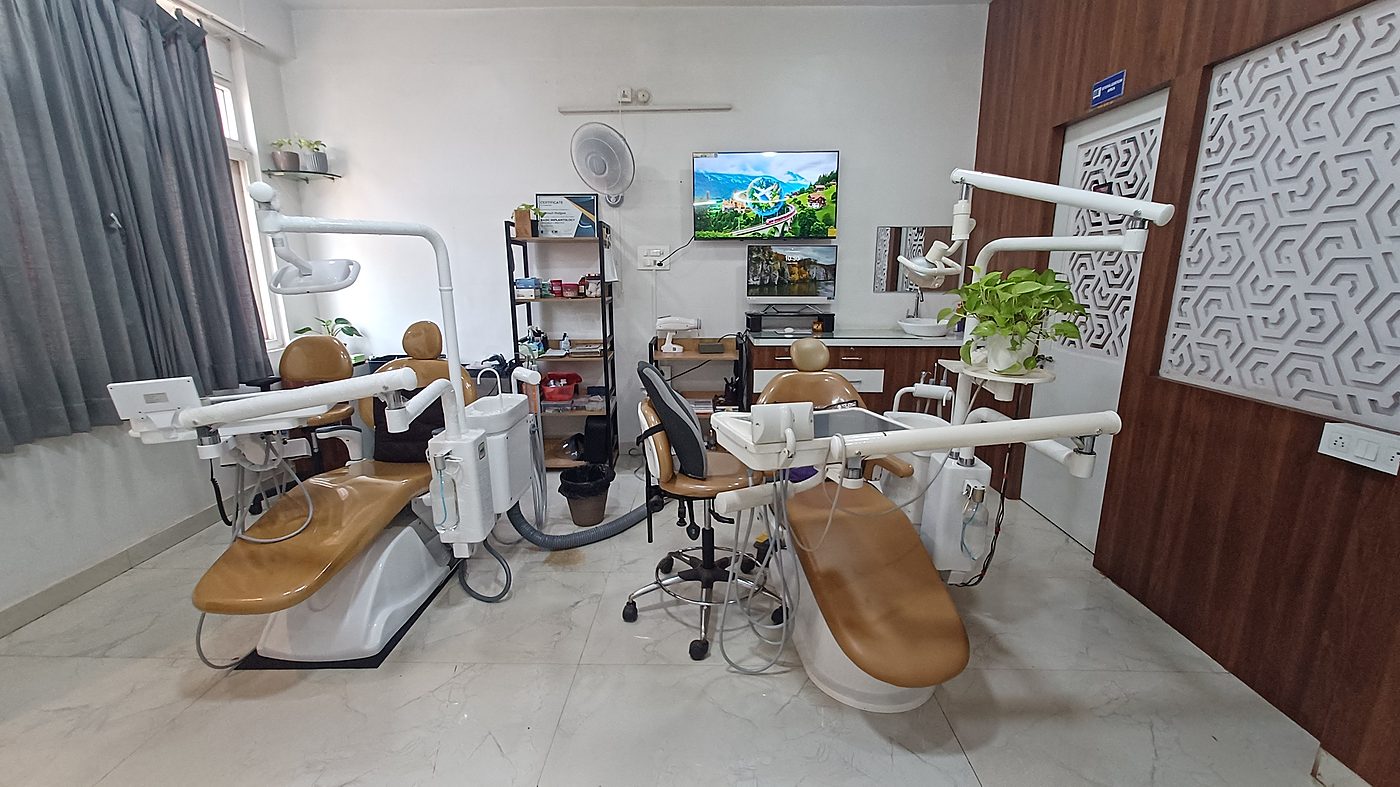
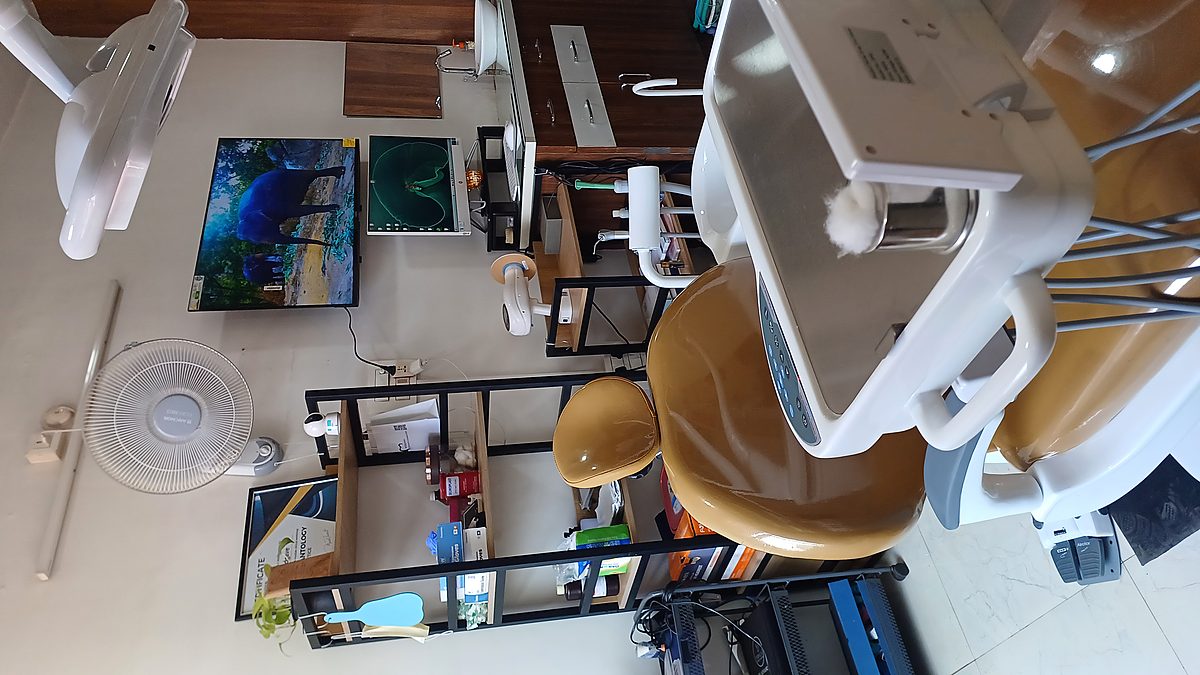
Stringent sterilisation protocols and a clean, well-maintained clinic ensure your safety at every visit.

04
Loupe Magnification

Every treatment at our clinic is performed using surgical dental loupes — high-magnification eyewear that reveals fine cracks, hairline cavities, and microscopic detail invisible to the naked eye. The result: sharper diagnosis, more conservative treatment, and better long-term outcomes for every patient.

05
Research-Backed Practice

Treatments grounded in the latest dental science, with Dr. Wadgave's own contributions to oral health research.

06
Transparent Communication

Honest pricing and treatment plans, explained in plain language. No hidden charges, no surprises — you'll know exactly what's being done and why, before we begin.

07
No Forced Selling

We recommend only what your teeth genuinely need — never more. Decline any treatment without pressure or judgement; earning your trust matters more to us than any single procedure.

08
Two Chairs, Faster Care

Two fully-equipped dental chairs and a multi-dentist team mean shorter waits, parallel appointments, and complex treatments completed in fewer visits — your time matters as much as your teeth.

Find Us

Hours & Location

Clinic Hours

Monday9:30 AM – 2:30 PM & 5:30 – 8:30 PM
Tuesday9:30 AM – 2:30 PM & 5:30 – 8:30 PM
Wednesday9:30 AM – 2:30 PM & 5:30 – 8:30 PM
Thursday9:30 AM – 2:30 PM & 5:30 – 8:30 PM
Friday9:30 AM – 2:30 PM & 5:30 – 8:30 PM
Saturday9:30 AM – 2:30 PM & 5:30 – 8:30 PM
Sunday10:30 AM – 1:00 PM

Visit Us in Bidar

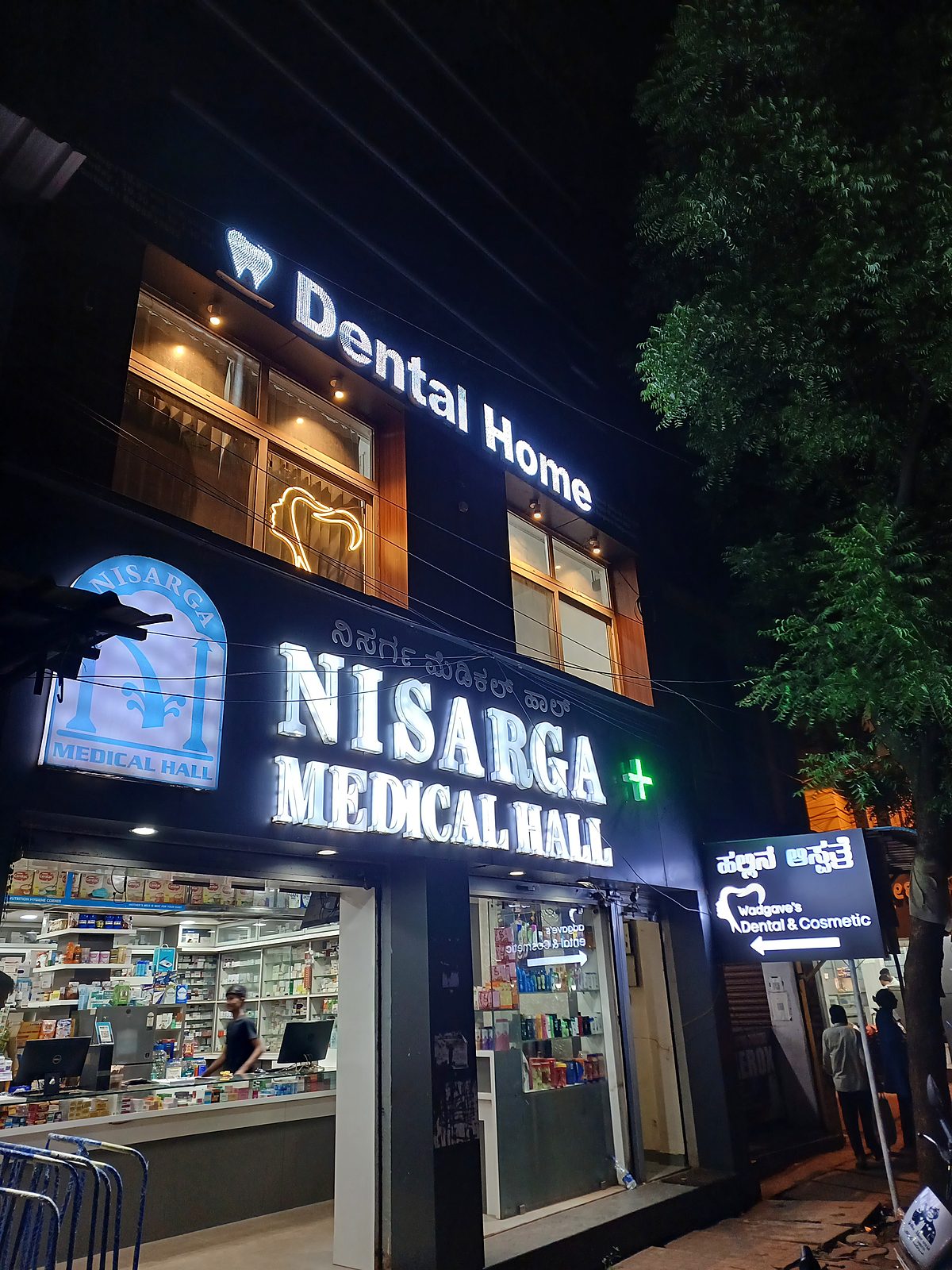
Easily accessible from across Bidar. Above Nisarga Medical at Mailoor Cross.

Mailoor Cross, BVB College Road Above Nisarga Medical, Bidar – 585401, Karnataka
Call for Appointments Available via Practo or Justdial listing
@wadgaves_dental_home Follow on Instagram for tips & updates
Book an Appointment
Mailoor Cross, BVB College Road
Above Nisarga Medical, Bidar – 585401, Karnataka
Get Directions
Patient Reviews

What Our Patients
Say

"I had an irregular bleeding gums problem from a year and having seen 2–3 dentists was not getting the right solution, so I gave this clinic a try. Turned out the issue could be treated surgically or through some changes in my oral routine & lifestyle. Dr. insisted me to give the latter approach a try first — truly appreciate the prioritising of conservative approach with which Dr. Umesh is treating patients. I am convinced that Dr. Umesh can be trusted, and he is now our family dentist."

BP
Balbhim Patil
Verified review · Google

"In Bangalore, different clinics gave different opinions about my treatment, which was confusing. Here, Dr. Umesh Wadgave explained the entire procedure clearly and guided me properly at every step. The root canal treatment was done smoothly without any issues. The staff was very polite, cooperative, and supportive throughout. The pricing was reasonable and affordable. Overall, very satisfied — highly recommended!"

EP
Eshwar pd
Verified review · Google · Local Guide

"My wife recently underwent a root canal and dental implant treatment done by Dr. Umesh sir. At first, we were a bit hesitant about getting the treatment done in Bidar. But the way Dr. Umesh sir explained every detail, patiently answered our questions, and gave us complete confidence was truly reassuring. Everything went smoothly, and my wife is now completely fine with no complaints. Dr. Umesh sir is highly skilled, gentle, and genuinely cares for his patients. Highly recommended for anyone looking for safe, trustworthy, quality dental care in Bidar."

MP
Mahesh Patil
Verified review · Google · Local Guide

"Dr. Umesh Wadgave is experienced, friendly, and knowledgeable. The clinic is well-equipped with modern facilities and maintained with excellent hygiene."

RP
Rahul Patil
Verified review · Justdial

"The staff are supportive, professional, and genuinely helpful in making patients feel comfortable during every step of the treatment."

SK
Sunita Kulkarni
Verified review · Justdial

"Dedicated to delivering high-quality, personalised care. The focus on comprehensive treatment and patient satisfaction makes this clinic stand out in Bidar."

AM
Anil Mathpati
Verified review · Justdial
Rated 4.8 ★ based on 123 reviews · 140+ clinic photos on Google
Patient Questions

Frequently Asked Questions

A quick read of the things patients ask us most often. If anything else is on your mind, send us a WhatsApp message or book a consultation — we're happy to walk you through it.

What happens during the first consultation?

Your first visit is unhurried and thorough. We begin with a detailed needs assessment — listening to what brought you in and what you'd like to achieve. Next, a complete medical history (existing conditions, medications, allergies) followed by a careful clinical examination of every tooth and your gums.

We capture digital X-rays for accurate diagnosis, and for complex cases an intra-oral scan to map your bite in 3D — no messy putty impressions. You leave with a detailed treatment plan and complete, transparent pricing — no hidden charges, no surprises.

Do you use an intra-oral scanner? How does digital dentistry help me?

Yes — and it's a genuine upgrade over traditional methods. An intra-oral scanner is a small handheld wand that captures thousands of high-resolution images of your teeth and gums in seconds, building a precise 3D digital model on the screen. No goopy impression trays, no gagging, no waiting for material to set.

This is the heart of modern digital dentistry, and the benefits are real:

  • Comfort first — Replaces messy putty impressions entirely. Most patients describe it as just having a small camera moved gently around their mouth.
  • Better-fitting results — Digital precision means crowns, bridges, veneers, and aligners fit accurately the first time, with fewer adjustment visits.
  • Faster turnaround — Your 3D scan is sent digitally to the lab in seconds, not days, so single-sitting and same-week treatments become possible for many cases.
  • You can see your scan — Treatment simulations, before-and-after comparisons, and a clear visual record of your dental health — all on screen with you, in real time.

Combined with digital X-rays and computer-assisted treatment planning, this is how we deliver care that's more precise, more predictable, and far more comfortable than traditional methods.

How is hygiene and sterilization handled at your clinic?

We follow a strict three-stage sterilization protocol for every instrument, every time:

  1. Chemical disinfection — Instruments are soaked in hospital-grade chemical disinfectants immediately after use.
  2. Manual cleaning — Thorough washing with soap and water removes all organic debris.
  3. Autoclave sterilization — Instruments are autoclaved in sealed sterilization packages so they remain sterile until the moment they reach you.

This is combined with surface disinfection between every patient, single-use disposables wherever possible, and clean operatory protocols. Your safety is non-negotiable.

Are your treatments painless?

Modern dentistry has come a long way from what most people remember. Effective local anaesthesia, careful surgical technique, and an unhurried pace mean most procedures — including root canals — are genuinely comfortable. New patients are often surprised at how easy their visit was.

How is the cost of treatment decided?

After the examination and any necessary X-rays or scans, we share a written treatment plan with itemised pricing — so you know exactly what each procedure costs before we begin. If the plan spans multiple sittings or procedures, we discuss it stage by stage so you can decide what to do now and what to schedule for later. No hidden costs, no surprise additions.

How do I book an appointment?

You have three easy options: tap the green WhatsApp button at the bottom-left of any page to message us directly, fill out the appointment form on this website, or call us during clinic hours. We'll confirm your 1-hour slot within 2 hours.

I feel anxious about dental visits. How do you help?

You're not alone — dental anxiety is genuinely common. We move at your pace: clear explanation of what's happening at each step, pauses whenever you need them, and the option to stop and reschedule. The environment is calm and judgement-free, and many patients tell us their first visit changed how they feel about dentistry.

Learn About Your Treatment

Patient Guides

Easy-to-read guides on every treatment we offer. Written in plain language so you can understand what's happening, why it's needed, and what to expect — before you sit in the dental chair.

Why a 6-Monthly Cleaning Is the Best Investment in Your Teeth

A professional cleaning every 6 months costs less than a dinner out, but can save you from root canals, crowns, and extractions worth lakhs over your lifetime. Here's why brushing alone isn't enough.

Read the full guide
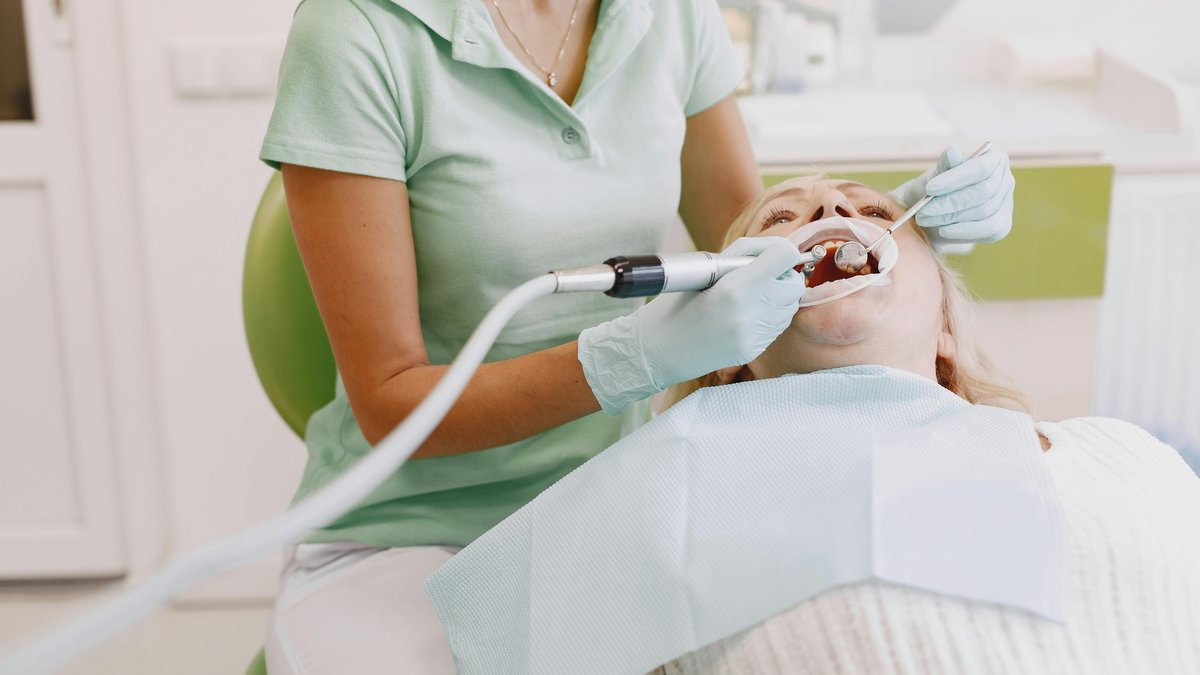
A patient receiving comfortable professional cleaning from a hygienist in a modern clinic

What is professional cleaning?

Brushing removes only about 60% of plaque from your teeth. The rest hardens into tartar — a stone-like deposit that only a dentist can remove. A cleaning visit (also called scaling) uses an ultrasonic device that gently vibrates the tartar off your teeth — completely painlessly.

Why every 6 months?

Tartar starts forming again within 24 hours of the last cleaning. By 6 months, enough has built up to cause gum inflammation, bad breath, and the early stages of cavities. Catching this early — before it turns into something bigger — is the entire point.

What happens during your visit?

1. Scaling (10–15 min): Ultrasonic and hand instruments remove tartar above and just below the gumline.
2. Polishing (5 min): Tooth surfaces are buffed smooth so plaque takes longer to stick again.
3. Examination: Every tooth is checked for early decay; every gum pocket is measured.
4. Fluoride application: Strengthens enamel and protects against decay for the next several months.

What you save by coming regularly

A cleaning costs a few hundred rupees. A root canal + crown can cost ₹15,000–25,000. An extraction followed by an implant runs ₹35,000–60,000. The math is simple — small, regular investments prevent expensive emergencies.

Who should come for cleaning?

Every adult, every 6 months. Diabetic patients, smokers, and pregnant women should come every 3–4 months — they're at higher risk for gum problems.

Watch how it's done

Proper toothbrushing technique

Why professional cleaning matters — prophy vs deeper scaling
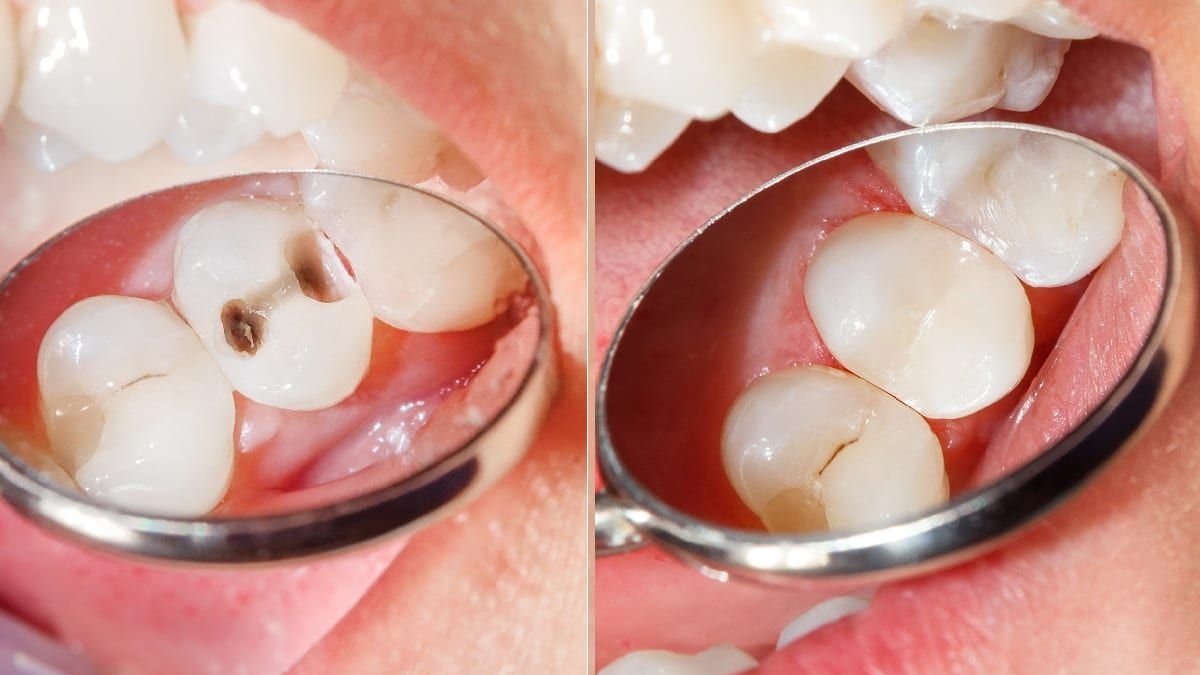
Tooth-Coloured Fillings — When You DON'T Need a Root Canal

Many patients are wrongly told they need root canals when a simple filling would solve the problem. A cavity caught early needs nothing more than a small composite filling that looks exactly like your real tooth.

Read the full guide
Before-and-after: a cavity restored with a tooth-coloured composite filling

What is a cavity?

Bacteria in your mouth eat sugars from your food and produce acid. Over time, this acid dissolves the hard outer layer of your tooth (enamel), creating a small hole — that's a cavity. Left alone, the cavity grows deeper and wider.

Stages of decay — and the right treatment for each

Stage 1 (in enamel only): a simple filling is enough.
Stage 2 (reaches the dentin layer underneath): still just a filling, but slightly bigger.
Stage 3 (reaches the pulp/nerve inside): now a root canal is needed.
Stage 4 (tooth is mostly destroyed): extraction, then implant or bridge.

The earlier you come, the smaller the treatment.

Composite vs. old silver fillings

The old "silver" amalgam fillings contained mercury, were grey/black in colour, and required drilling out healthy tooth structure to hold them in place. Modern composite fillings are tooth-coloured, mercury-free, bonded directly to your tooth (so less healthy structure is removed), and last 7–10+ years with normal care.

What happens during the procedure?

1. The area is numbed with a small injection (takes about 5 minutes to fully work).
2. The decay is removed with a precision drill — usually 10 minutes.
3. The composite material is placed in layers, hardened with a blue curing light.
4. The filling is shaped, bite-checked, and polished smooth.
Total time: 30–45 minutes per tooth.

Will it hurt?

No. Local anaesthesia makes the area completely numb. Patients usually feel nothing more than mild pressure.

When to come

If you see any discolouration, dark spots, or feel sensitivity to cold or sweets — come quickly. The earlier we catch it, the smaller (and cheaper) the filling.

Watch how it's done

Composite filling — step-by-step 3D animation

Root Canal Treatment — Why It's Nothing to Fear

Modern root canals are as comfortable as a regular filling. The treatment saves your natural tooth instead of pulling it out — and your own tooth always works better than any replacement.

Read the full guide
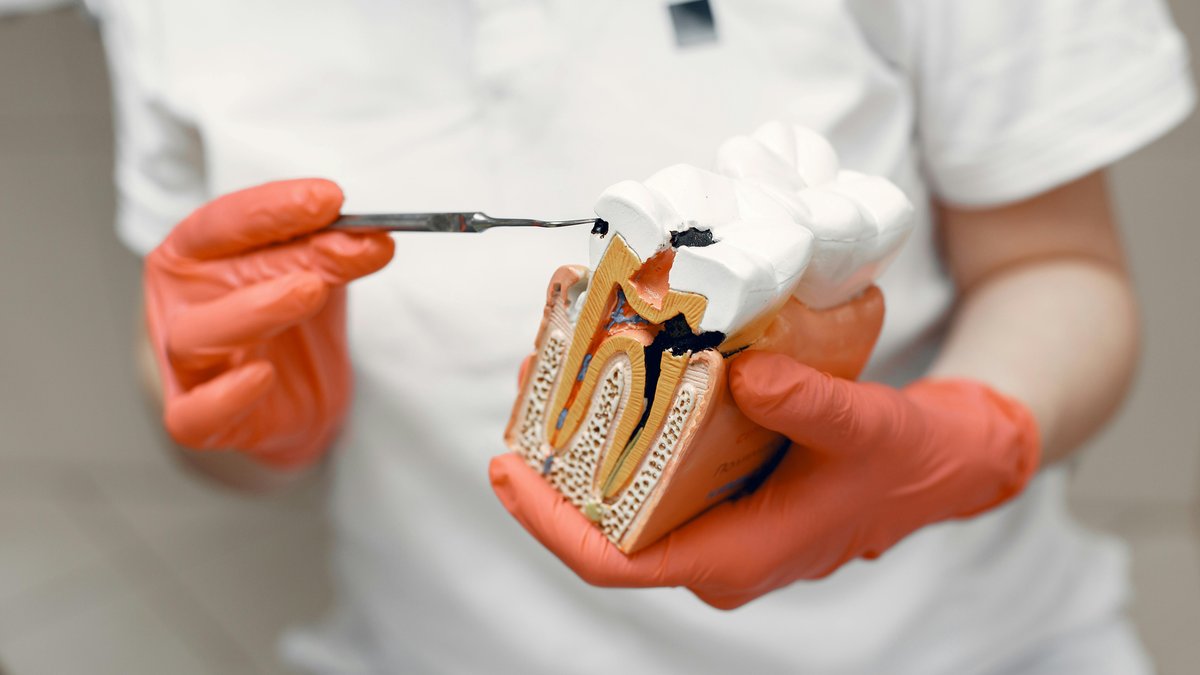
Dentist holding an anatomical tooth model showing the inner pulp chamber treated during root canal

What is inside a tooth?

The hard outer layers (enamel + dentin) protect a soft inner core called the pulp. The pulp contains the nerves and blood vessels of the tooth, running down through tiny channels called root canals into your jaw.

When is RCT needed?

When decay or injury reaches the pulp, bacteria infect it. The pulp dies. This causes severe pain, swelling, and sometimes a dental abscess. Without root canal treatment, the tooth has to be extracted.

Symptoms that suggest you may need an RCT

Sharp pain when chewing. Lingering pain after eating something hot or cold. Sudden swelling of the gums near a tooth. Throbbing pain at night that wakes you up. One tooth turning darker than the others.

How does the procedure work?

1. The area is completely numbed.
2. A small opening is made at the top of the tooth.
3. Using precision rotary instruments, the infected pulp is cleaned out of the root canals. (This is the part old-fashioned RCTs did by hand, which is why they took longer and felt rougher.)
4. The canals are disinfected with antibacterial solution.
5. The canals are filled with a biocompatible material called gutta-percha.
6. The opening is sealed with a filling.
7. A crown is placed within 2–3 weeks to protect the tooth.

Will it hurt?

No. With modern anaesthesia and rotary instruments, RCT is genuinely comfortable. Most patients are surprised at how easy it is — usually no worse than a regular filling.

Why you need a crown afterwards

A root-canalled tooth becomes more brittle without its blood supply. A crown protects it from cracking during chewing. Skipping the crown is the #1 reason root canals fail later.

How long does it last?

With a properly fitted crown, a successful RCT can last 20+ years. Many last a lifetime.

Watch how it's done

Root canal treatment — what actually happens, in 3D

Crowns & Bridges — Saving Damaged Teeth, Replacing Missing Ones

A crown is like a helmet that covers a weak tooth completely. A bridge replaces a missing tooth using the neighbours as supports. Today's Zirconia crowns look identical to real teeth.

Read the full guide
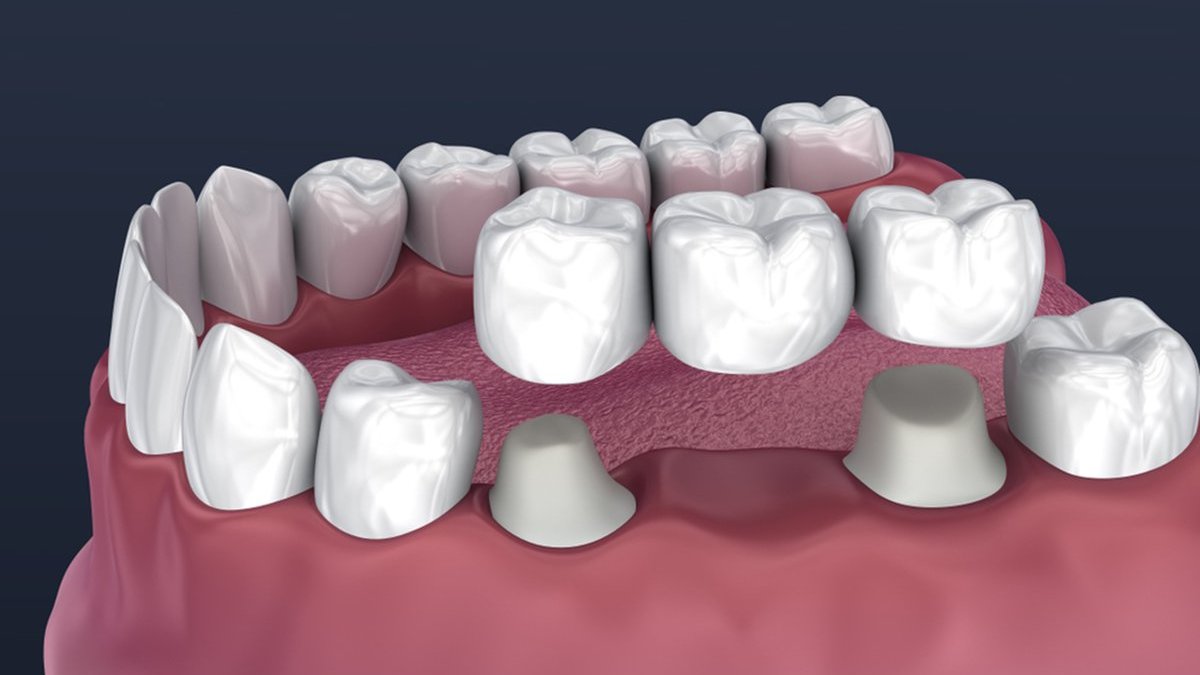
Dental crown and bridge placement on prepared teeth

What is a crown?

A custom-made cap that fits over your entire tooth above the gumline. It restores the tooth's strength, shape, and appearance — and protects what's underneath.

When do you need a crown?

After a root canal treatment (to protect the now-brittle tooth). When a large filling has broken or keeps failing. When a tooth is cracked but still saveable. To improve the appearance of a badly stained or misshapen tooth.

Crown materials — what's right for you

PFM (Porcelain Fused to Metal): a metal base coated with white porcelain. Time-tested over decades, strong, more affordable. Good for back teeth where appearance matters less.

Zirconia: a completely metal-free, white ceramic. Translucent like real teeth, exceptionally strong, and looks identical to natural teeth. The premium choice today, especially for front teeth or anyone wanting the best aesthetics.

What is a bridge?

If you're missing a tooth, a bridge fills the gap. The two teeth on either side of the gap are shaped slightly to receive crowns. A "false tooth" (called a pontic) is fused between these crowns, sitting in the empty space. The whole 3-piece unit is cemented in place — fixed, not removable.

The intra-oral scanner advantage

At our clinic, we capture your impression with a small digital wand instead of the goopy putty trays you may remember from old visits. No gagging, no waiting for material to set, no discomfort. The scan is sent digitally to the lab. Result: better-fitting crowns and bridges, faster turnaround.

How long do they last?

10–15+ years is typical with proper care — regular brushing, careful flossing (especially under bridges), and 6-monthly cleanings.

Watch how it's done

How a dental bridge is placed

Dental Implants — The Closest Thing to a Real Tooth

A dental implant is a small titanium screw that replaces the root of a missing tooth. With a custom crown on top, it looks, feels, and works exactly like your natural tooth — and can last 20+ years.

Read the full guide
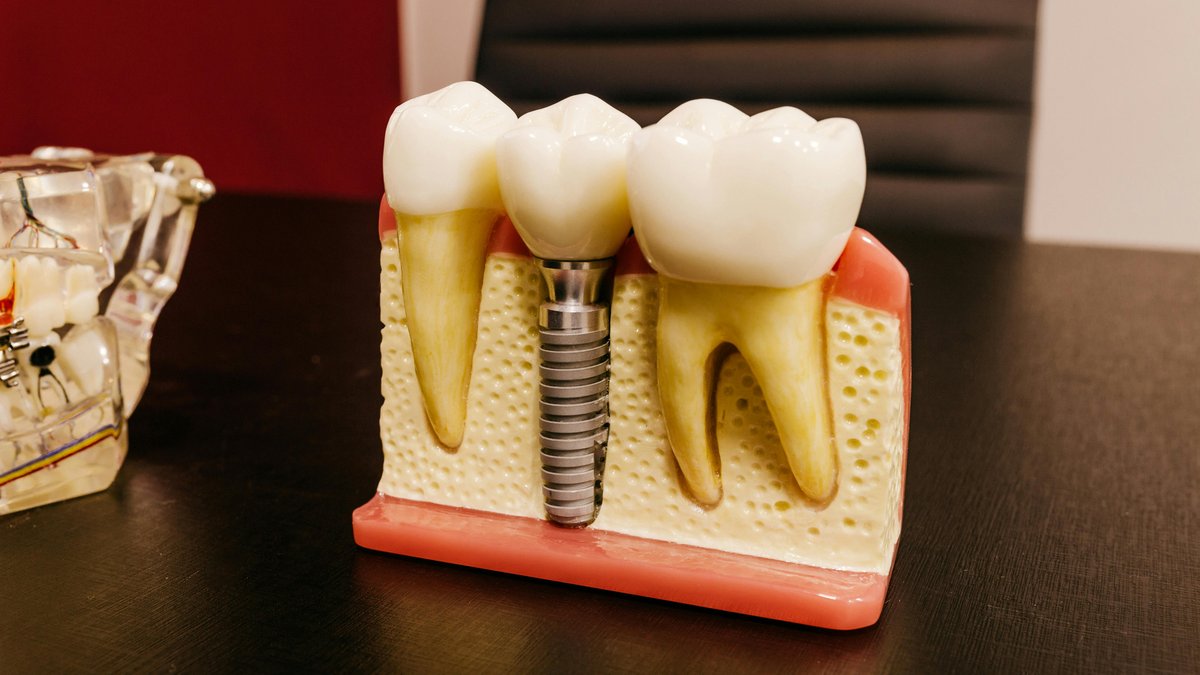
A real anatomical model showing how a dental implant integrates between natural teeth

What is a dental implant?

An implant has three parts:
1. Implant: a small titanium screw, surgically placed into your jawbone where the tooth root used to be.
2. Abutment: a connector piece that sits on top of the implant.
3. Crown: the visible tooth-shaped cap that attaches to the abutment.

Why implants are usually the best option for missing teeth

Compared to a bridge: doesn't require grinding down the healthy neighbouring teeth.
Compared to a denture: doesn't move around, doesn't come out, doesn't change how you eat or speak.
Prevents jawbone loss: when a tooth is missing, the jawbone in that area gradually shrinks. An implant maintains the bone the way a natural root does.

How long does the process take?

Phase 1 (Day 1 — Placement): The implant is placed surgically under local anaesthesia. Takes about 45–60 minutes per implant.
Phase 2 (3–4 months — Healing): The bone grows around and fuses with the titanium implant — this is called osseointegration. During this time, you may wear a temporary tooth.
Phase 3 (Crown placement): Once healed, the abutment and final crown are placed.
Total timeline: typically 3–4 months from start to finish.

Is it painful?

The surgical phase is done under local anaesthesia — you feel nothing during the procedure. Most patients report less post-operative discomfort than they expected — a paracetamol or two for a day or two is usually enough.

Cost vs. value

Implants are the most expensive single-tooth replacement upfront. But they last the longest (20+ years, often a lifetime), don't damage other teeth, and prevent bone loss. Over a lifetime, they're often the most cost-effective option.

Who is NOT a good candidate?

Heavy smokers (healing is poor). Uncontrolled diabetics. Patients with inadequate jawbone (though bone grafting can sometimes solve this). Patients on certain medications affecting bone healing. We evaluate every case individually before recommending implants.

Watch how it's done

Dental implant surgery — placement and crown restoration in 3D

Straightening Teeth at Any Age — Braces vs Clear Aligners

Crooked teeth aren't just a cosmetic issue — they wear unevenly, are harder to clean, and can cause jaw pain. Today's options range from traditional metal braces to nearly invisible clear aligners.

Read the full guide
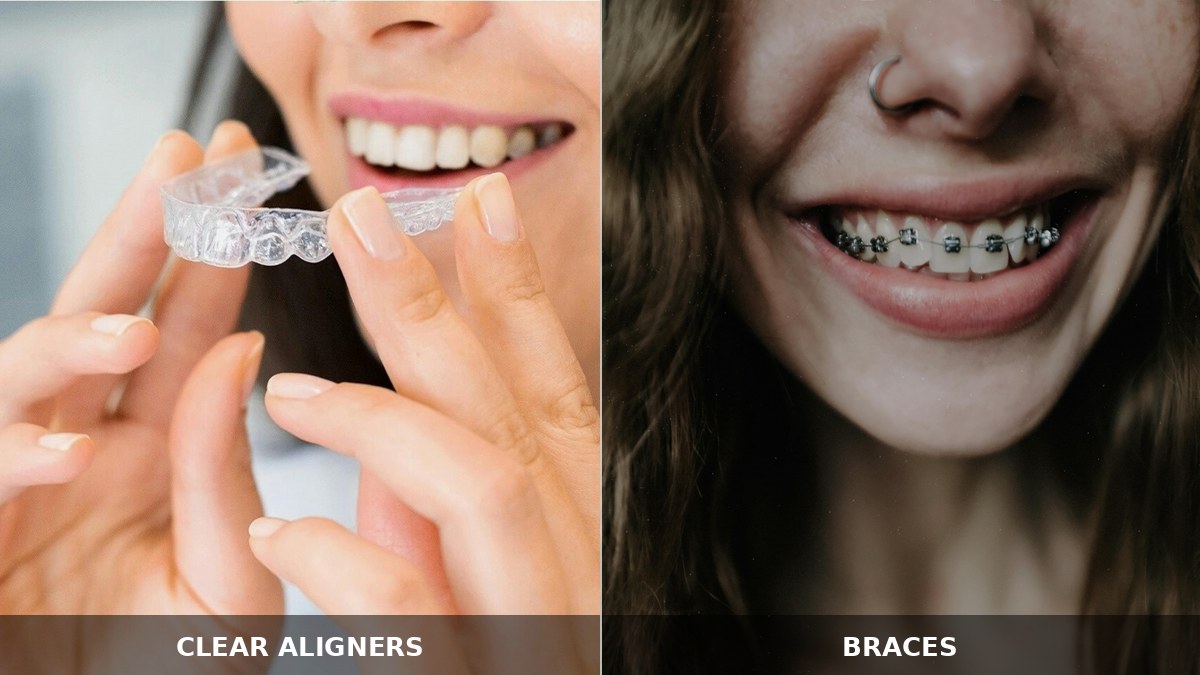
Clear aligners versus traditional metal braces — side-by-side comparison

Why straightening matters beyond appearance

Misaligned teeth create real problems beyond looks. Some teeth do more work than others, wearing down faster. Food traps in crowded spots, causing cavities and gum disease where you can't reach properly. And misalignment is a leading cause of TMJ (jaw joint) pain and headaches.

Metal braces

The classic option. Small metal brackets are bonded to each tooth, connected by a wire that we adjust every 4–6 weeks. Strongest force — can handle the most complex cases (severe crowding, big bite issues). Most affordable option. Treatment time: typically 1–2 years.

Ceramic braces

Same as metal braces but with tooth-coloured ceramic brackets — much less visible from a distance. Slightly more expensive than metal. Great middle-ground option for adults who want braces to be subtle but need stronger correction than aligners offer.

Clear aligners (Invisalign-style)

A series of clear plastic trays, each one slightly different, gradually moving your teeth into the right position. You wear each tray for 1–2 weeks before moving to the next.

Advantages: almost invisible, removable for eating and drinking, easy to brush and floss normally. Suitable for mild-to-moderate cases. Treatment time: 6 months to 2 years.

3D treatment planning

Before you start, we use a 3D scan plus planning software to show you exactly what your teeth will look like at the end. You see the expected outcome before you commit to treatment.

Adults can do this too

About 30% of orthodontic patients today are adults. Clear aligners especially have made adult treatment far less self-conscious. It's genuinely never too late.

What to expect during treatment

Mild soreness for 2–3 days after each adjustment (manageable with paracetamol). Some food restrictions with metal braces (avoid very hard or sticky foods). Regular visits every 4–6 weeks.

Watch how it's done

How clear aligners work

How braces actually move your teeth — 3D animation

Wisdom Teeth — When They Need to Come Out

Wisdom teeth often come in at odd angles, get stuck under the gum, cause pain, or push other teeth. Removal sounds scary but is a routine procedure with predictable healing.

Read the full guide
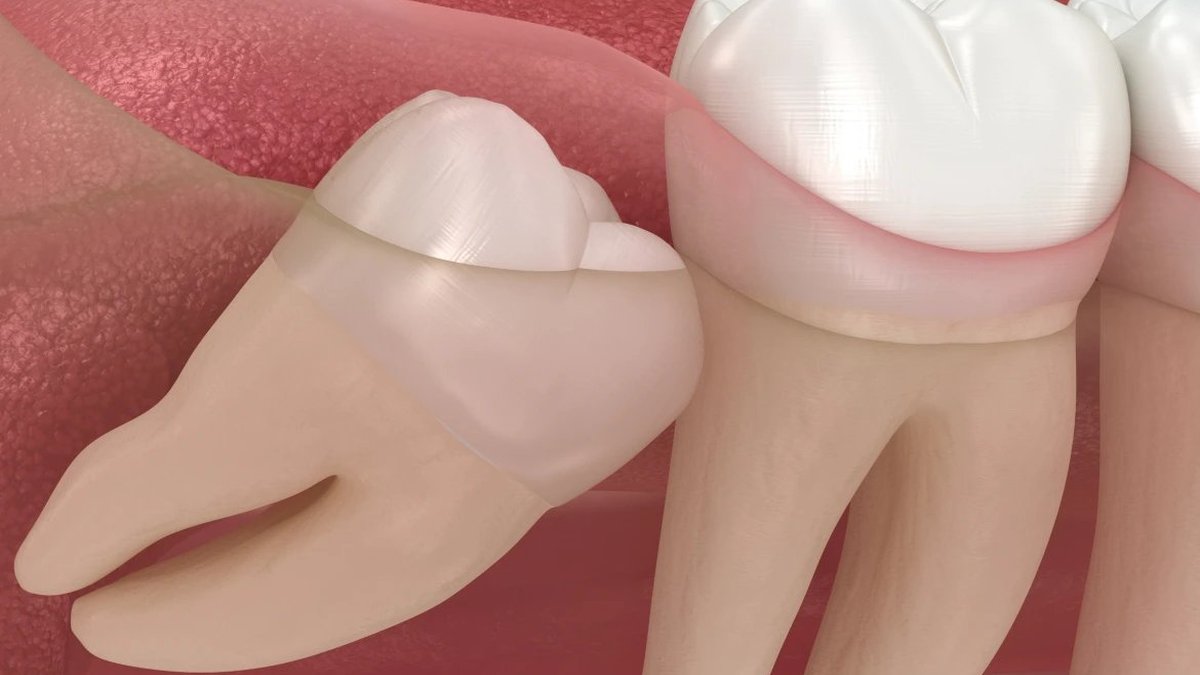
Illustration showing an impacted wisdom tooth pushing against the adjacent molar

What are wisdom teeth?

The third and last set of molars, at the very back of your mouth. They usually appear between ages 17 and 25. Some people have all four; some have none; some have one or two.

Why they often cause problems

Modern human jaws are smaller than our ancestors' — but our wisdom teeth haven't got the memo. They often don't have enough room to come in properly. They may come in sideways, partially erupt (poke through the gum partially), or stay completely stuck (impacted) in the bone.

Signs you may need yours removed

Pain at the back of your jaw, especially behind your last molar. Swelling or redness of the gum near a wisdom tooth. Bad taste or smell coming from the back of your mouth. Difficulty opening your mouth fully. Pain that spreads to your ear or temple.

Not always necessary to remove

If your wisdom teeth have come in straight, fully erupted, are easy to clean, and aren't causing problems — they can stay. About 20–25% of people keep their wisdom teeth lifelong without trouble.

The procedure

Local anaesthesia makes the area completely numb. For simple wisdom teeth (fully erupted), removal takes 15–20 minutes. For impacted teeth (stuck in bone), we make a small incision in the gum, remove the tooth (sometimes in pieces, to spare the bone), and place 2–3 dissolvable stitches. Total time: 30–45 minutes.

Recovery

Some swelling and discomfort for 2–4 days. Soft diet for 5–7 days (khichdi, dal, curd rice, soups, smoothies). Avoid spicy food, hot drinks, and straws for the first week. Most people return to work the next day for simple cases, or in 2–3 days for surgical extractions.

Aftercare basics

Bite gently on the gauze pack for 30 minutes (controls bleeding). Apply ice externally for 24 hours to reduce swelling. Avoid rinsing your mouth for 24 hours. After that, gently rinse with warm salt water 3–4 times daily. Take prescribed antibiotics and pain medications exactly as directed.

Watch how it's done

Wisdom tooth removal — animated walkthrough

Flap Surgery for Gums — When Cleaning Isn't Enough

When gum disease has gone deep below the gumline, regular cleaning can't reach the infection. Flap surgery gently lifts the gum, cleans the root surfaces underneath, then places the gum back — saving teeth that would otherwise be lost.

Read the full guide
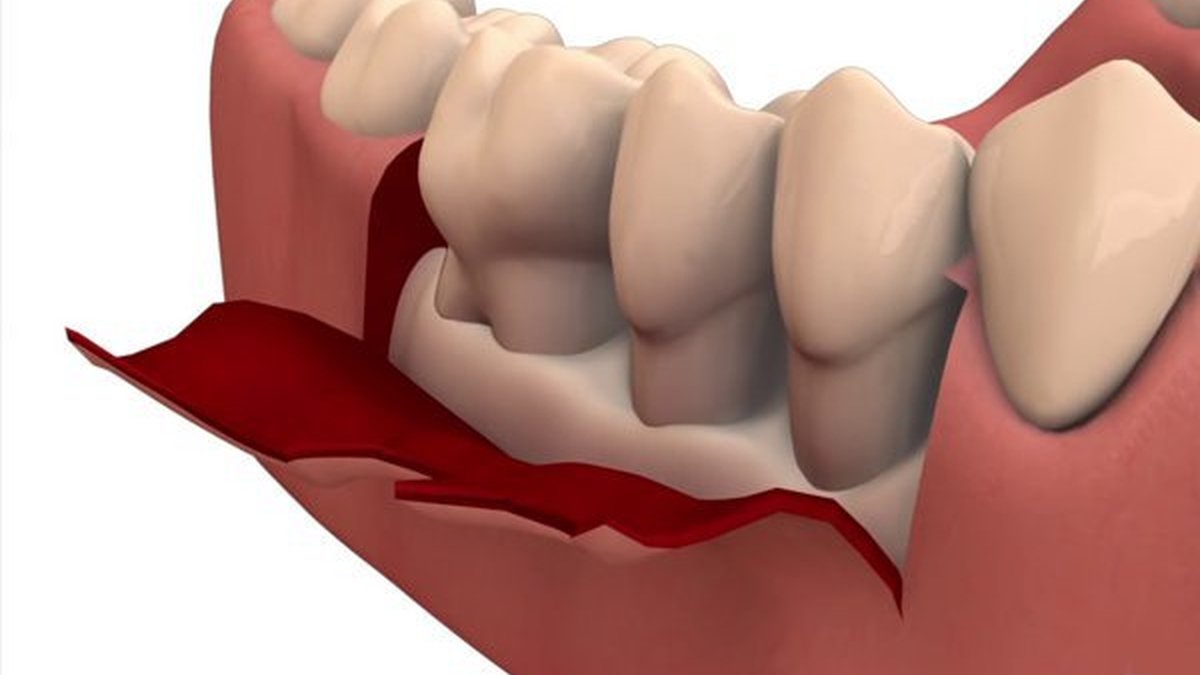
Illustration of flap surgery — gum tissue gently lifted to clean deep below

Understanding gum disease in two stages

Stage 1 — Gingivitis: Gums become red, swollen, and bleed when brushing. This stage is fully reversible with professional cleaning + better home care.

Stage 2 — Periodontitis: Infection has spread below the gum, forming "pockets" between the tooth and gum where bacteria thrive. The bone supporting your teeth starts to dissolve. This stage is NOT reversible — but it can be stopped with proper treatment, including flap surgery in advanced cases.

Why advanced gum disease is dangerous

Once bone is lost, teeth start becoming loose. Without intervention, the teeth eventually need to be extracted. And the damage isn't limited to your mouth — gum disease is now linked to heart disease, stroke, diabetes complications, and pregnancy issues.

When is flap surgery needed?

When gum pockets are deeper than 5mm (measured during examination). When there's visible bone loss on x-rays. When less invasive treatments (regular scaling, deep cleaning, root planing) haven't fixed the problem.

The procedure step by step

1. Local anaesthesia numbs the area completely.
2. A small incision is made along the gumline.
3. The gum is gently lifted away from the tooth (this is the "flap").
4. The root surfaces and the underlying bone are thoroughly cleaned — this is the part that regular cleaning simply cannot reach.
5. Any infected tissue is removed.
6. If needed, bone-grafting material is placed to encourage regrowth.
7. The gum is sutured back in place.
Total time: 60–90 minutes for a typical multi-tooth area.

Recovery

Some swelling and mild discomfort for 3–5 days. Soft diet for 1 week. Stitches are removed (or dissolve) in 7–10 days. Most people resume normal activities the next day. The treated area heals fully over 2–3 months.

The crucial maintenance afterwards

Flap surgery stops further damage but doesn't cure gum disease forever. To keep the disease from coming back, you'll need professional cleanings every 3–4 months (not 6) and meticulous home care — brushing twice daily, flossing daily, and using a soft brush.

Watch how it's done

Periodontal flap surgery — Modified Widmann technique

Teeth Whitening — Safe, Professional, and Long-Lasting

In-clinic teeth whitening lifts years of staining from coffee, tea, and tobacco in a single 45-minute sitting. It's safer and far more effective than the strips and gels sold over the counter.

Read the full guide
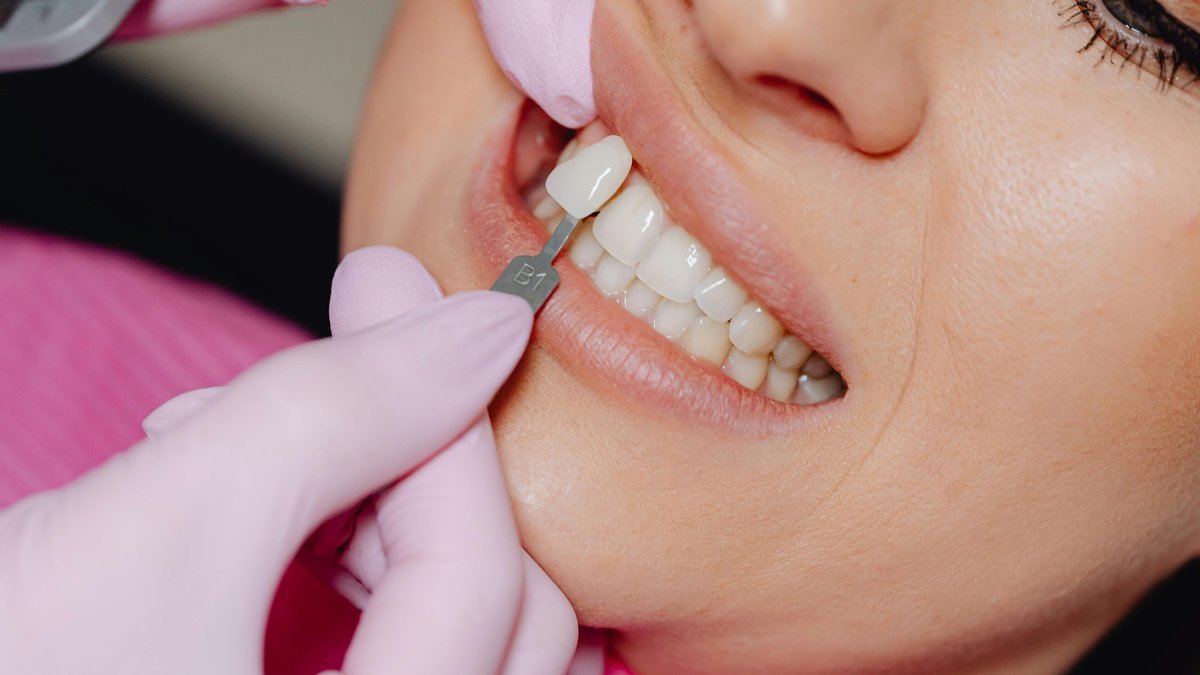
Dentist matching the right tooth shade during a professional whitening consultation

Why teeth get stained

Surface stains come from things you eat and drink — coffee, tea, red wine, soda, turmeric, dark berries. Tobacco (smoking, gutka, pan masala) is especially staining.

Deeper stains can come from age (enamel naturally thins over decades, exposing the more yellow dentin layer underneath), certain medications taken in childhood (especially tetracycline antibiotics), or trauma to a tooth that may darken it years later.

In-clinic professional whitening

A protective barrier is placed over your gums (so the whitening gel only touches your teeth). A medical-grade whitening gel is applied. A specialised light activates the gel for 15-minute cycles, repeated 2–3 times. Total visit: 45–60 minutes. Result: teeth visibly several shades whiter on the same day.

At-home whitening (alternative or supplement)

Custom-made trays are created from impressions of your teeth. You fill them with a milder whitening gel and wear them for 30–60 minutes daily for 1–2 weeks at home. Slower than in-clinic, but gentler. We sometimes combine in-clinic and at-home for maximum, longest-lasting effect.

Why over-the-counter strips often disappoint

They contain weaker gel (lower concentration). They don't fit your unique tooth shape — uneven contact means uneven whitening. No protection for your gums (often causes sensitivity). They're not recommended for tetracycline stains or for teeth with crowns/fillings (those won't change colour).

Is whitening safe?

Yes, when done professionally. The active ingredients (hydrogen peroxide or carbamide peroxide) have been used safely in dentistry for decades. Some patients experience temporary tooth sensitivity for 24–48 hours after treatment — this passes.

How long does it last?

Typically 1–3 years. Coffee, tea, tobacco, and dark foods will slowly cause re-staining. A "touch-up" treatment every 1–2 years maintains the brightness.

Important: existing crowns and fillings won't change colour

If you have visible crowns or fillings on your front teeth, they'll stay the same shade while your natural teeth get whiter — which can look mismatched. We discuss this before treatment and can plan replacements if needed for a uniform result.

Watch how it's done

Professional teeth whitening — explained

Full Mouth Rehabilitation — When Multiple Issues Need Coordinated Care

When teeth across the whole mouth need attention, fixing them one at a time produces compromised results. A coordinated full-mouth plan combines implants, crowns, bridges, and other treatments to restore complete oral function and appearance.

Read the full guide
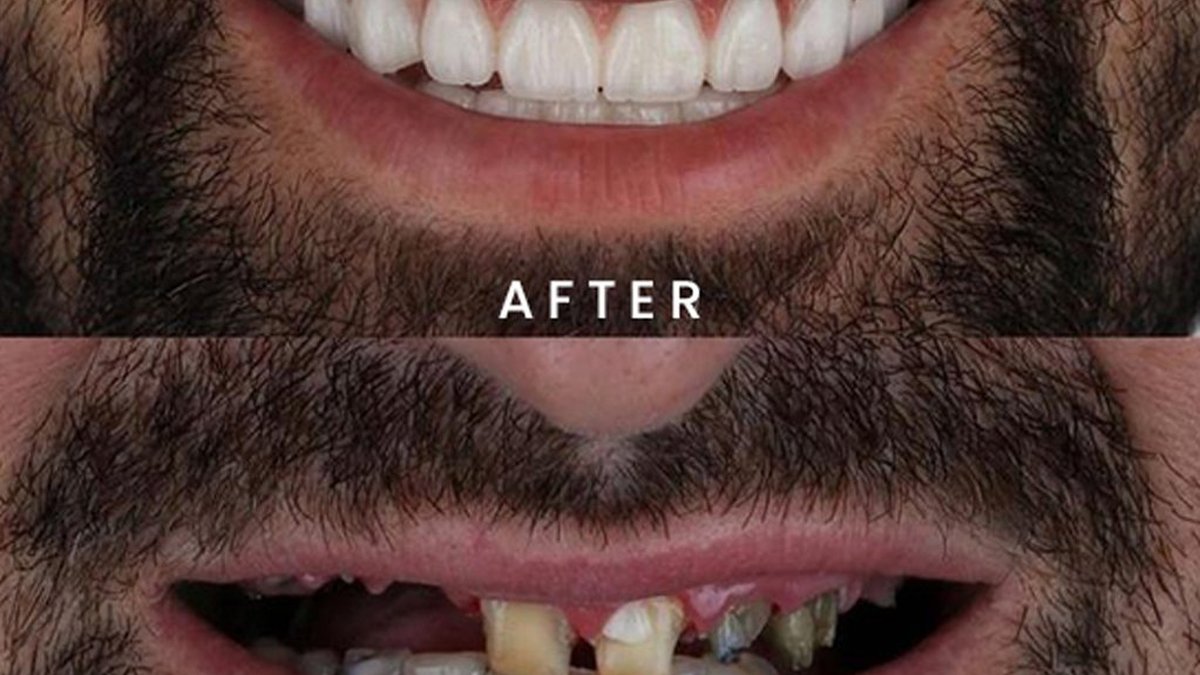
Before-and-after: full mouth rehabilitation restores a complete, confident smile

When you need full mouth rehabilitation

Multiple missing teeth (3 or more). Severe tooth wear from grinding (bruxism), acid erosion, or aging. Many old failed dental works (broken crowns, leaking fillings, failed root canals). A combination of decay, gum disease, and bite problems. Patients who want to completely restore both function and appearance of their smile after years of neglect or accumulated damage.

Why one-tooth-at-a-time doesn't work for complex cases

Every tooth in your mouth affects every other tooth. Restoring just one without considering the bite, the gums, the jaw joint, and the overall facial appearance produces compromised results that don't last. Full mouth planning treats the entire mouth as one connected system.

Why MDS-level expertise matters here

A full mouth rehabilitation requires advanced skills in implants, crowns and bridges, gum treatment, root canals, occlusion (bite analysis), and aesthetic planning. Dr. Umesh Wadgave's MDS background means complex cases are diagnosed and sequenced under one roof, by one experienced clinician, rather than getting fragmented care from multiple specialists.

The planning phase — the most important step

1. Comprehensive examination of every tooth, gum, and joint.
2. Full set of digital X-rays + 3D intra-oral scans.
3. Bite analysis and study models.
4. Photographs for aesthetic planning.
5. A written treatment plan with sequenced phases, time estimates, and complete transparent costs.
6. You see and approve the proposed outcome before we begin.

Typical treatment sequence

Phase 1 — Stabilisation: Active infections cleared, gum disease treated, hopeless teeth extracted.
Phase 2 — Foundation: Implants placed where teeth are missing (3–4 months of healing follows).
Phase 3 — Restoration: Crowns, bridges, and veneers placed across the mouth in a coordinated way.
Phase 4 — Refinement: Final adjustments to bite, polish, aesthetics.

Timeline

Most full mouth rehabilitations take 6–12 months from start to finish. The implants need healing time. The benefit: at the end, you have a complete, functional, beautiful smile that will last 15–20+ years with normal care.

Cost consideration

Full mouth rehab is a substantial investment — usually ₹2–8 lakhs depending on complexity. We provide complete, transparent pricing upfront. Treatment can sometimes be done in phases to spread the cost over time.

Watch how it's done

All-on-4 full-mouth restoration — 3D animation

Get In Touch

Book Your
Appointment

Fill in the form and our team will confirm your slot. Available Mon–Sat, morning and evening sessions.

Strict sterilisation and safety protocols at every visit
Minimal waiting — we respect your time
Welcoming, judgement-free environment — including nervous patients
Transparent pricing — no hidden charges or surprises

Request an Appointment

Request Received! We'll call you within 2 hours to confirm your appointment slot.
Chat with us on WhatsApp Book Now